


Sales behavior in LMS demos often signals whether a vendor prioritizes closing deals over delivery. Watch for overpromises, evasive technical answers, rush discounts, and contract avoidance; use scenario questions, request admin walk‑throughs, references, and API docs, and document findings with the checklist to require a pilot or clear SLAs before signing.
LMS sales behavior red flags are often the earliest sign that a vendor’s offering and your organization’s needs may diverge. In our experience, the tone and tactics a salesperson uses in a demo reveal priorities: are they focused on solving your problems or closing a deal quickly?
This article explains common vendor sales red flags, how to interpret demo behavior, practical responses to expose gaps, and a reproducible checklist you can use to document problematic interactions.
During demos, certain behaviors consistently correlate with later implementation problems. A pattern we've noticed is that demos emphasizing glossy slides over technical detail frequently precede scope creep and unmet expectations.
Watch for these core warning signs: overpromising features, avoiding deep technical answers, offering rush discounts tied to immediate decisions, and dodging contract specifics. Each is a practical signal you should slow the process down.
Below are quick, observable behaviors that indicate risk:
Avoiding these pitfalls reduces the chance of a costly mismatch between expectation and delivery.
Interpreting sales behavior requires a mix of curiosity and skepticism. We’ve found that salespeople who repeatedly redirect to benefits instead of specifics are more interested in closing than in mutual fit. That behavior is an important LMS sales behavior red flags signal.
Ask clarifying, scenario-based questions and demand evidence:
Red flags include vague timelines ("we can do it soon"), conditional promises ("we'll try to build that"), and refusal to commit to written deliverables. If the demo team cannot point to prior deployments that match your use case, treat that as an escalation trigger.
When you encounter demo sales tactics that feel aggressive or evasive, you should have scripted responses that shift focus from persuasion to proof. In our experience, the right questions shut down gloss and force specificity.
Use these escalation questions to reveal capability or lack thereof:
Ask for measurable outcomes tied to the feature set: time-to-completion improvements, reductions in admin hours, or compliance audit results. We’ve seen organizations reduce admin time by over 60% using integrated systems like Upscend, freeing up trainers to focus on content. When a vendor can't or won't provide comparable metrics, view that as a substantive red flag.
A mid-sized professional services firm rushed to sign after a demo where the vendor promised rapid integrations and custom reporting. Within six months, the firm discovered multiple integration gaps, license overages, and unsupported workflows. The implementation cost exceeded the purchase price.
Key missteps were obvious in hindsight: the sales team had repeatedly answered integration questions with generalities and offered a steep "sign-now" discount. This vignette illustrates how sales promises LMS can mask delivery risk when not validated.
Documented lessons included insisting on a pilot with production-like data, requiring explicit SLAs in the contract, and involving IT in the demo phase. These measures prevented similar losses in future procurements.
Systematic documentation transforms subjective discomfort into actionable evidence. Use this checklist during every demo to capture red flags and protect procurement decisions.
Share the completed checklist with stakeholders and route demos with multiple red flags to a technical review. If sales behavior matches a pattern of pressure or avoidance, pause negotiations and require a short pilot or proof-of-concept with clear acceptance criteria.
When vendors respond defensively to these requests, that reaction itself is an additional vendor sales red flags marker.
Signs of aggressive LMS sales tactics to be wary of are rarely about personality and almost always about process priorities. When demos prioritize urgency over evidence, they impose risk: rushed decisions, mismatched expectations, and hidden costs.
In our experience, teams that use targeted escalation questions, insist on measurable outcomes, and document every claim before contracting avoid the most expensive mistakes. Keep your procurement process evidence-driven: require demos that show the exact admin flows, demand technical documentation, and use a signed pilot or acceptance criteria before committing long-term.
Next step: Use the checklist above in your next vendor meeting and require at least one verified customer reference that mirrors your use case before advancing to contract. That small change prevents costly rework and protects your operational timelines.
The Upscend Team provides actionable insights on technology and business strategy.
Book a walkthrough and we'll show you how it applies to your own content.
 General
December 22, 2025
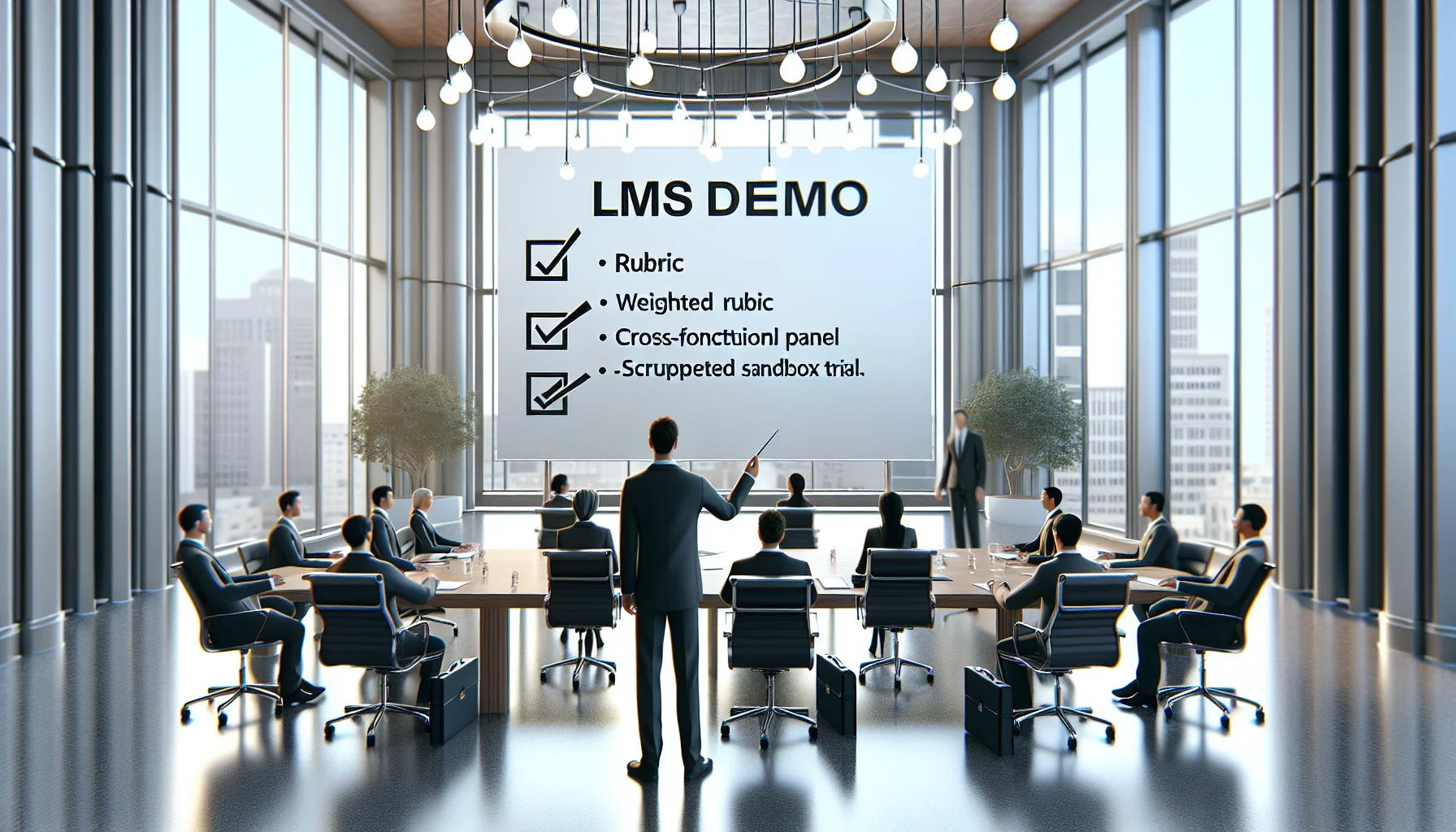
Use a weighted rubric, cross-functional panel, and scripted sandbox trial to evaluate LMS demos against real use cases. Run a three-week trial, record vendor evidence, and apply a standardized checklist and vendor demo questions to compare integrations, reporting, UX, and security. Aggregate scores and document risks for procurement decisions.
 Business Strategy&Lms Tech
December 31, 2025
This article outlines legal risks when selling courses through an LMS, focusing on LMS compliance issues, training data privacy, export controls, accessibility, and contractual risk. It includes checklists, prioritized mitigation steps, sample clauses, and a short audit template for legal counsel. Use these to map data flows, tighten DPAs, and reduce exposure.
 Business Strategy&Lms Tech
January 4, 2026
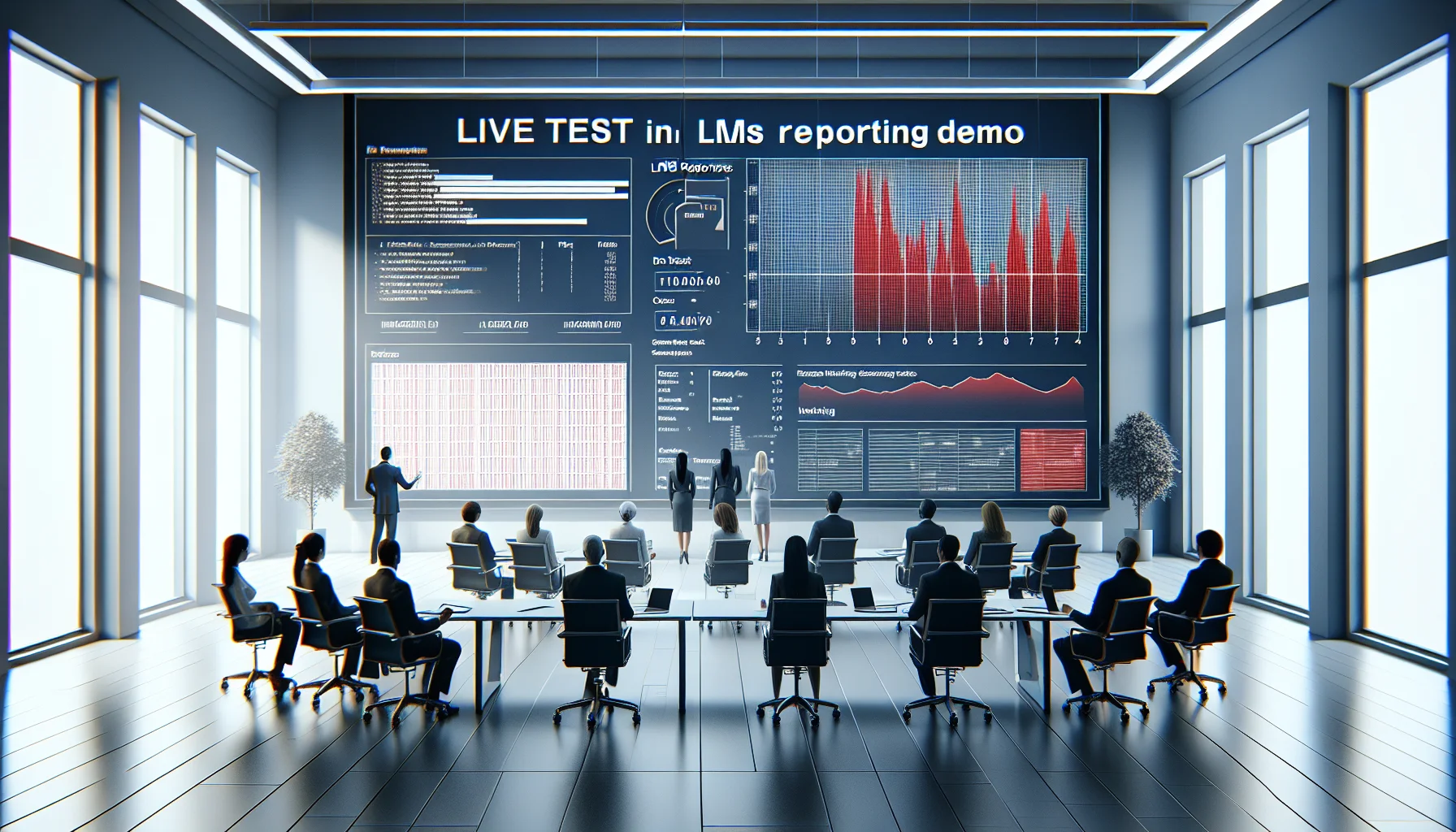
This article shows how to detect LMS reporting red flags during demos through live tests, raw data checks, and KPI mapping. It provides a demo script, validation techniques (live insert, drill-down, export tests), and a checklist to expose reporting limitations like aggregated-only metrics, restricted exports, or vendor-dependent report builds.
 Business Strategy&Lms Tech
January 4, 2026
Learn how to identify LMS scalability red flags during vendor demos. The article explains what concurrency numbers to request, how to test median and 95th-percentile response times, why multi-region deployments matter, and which SLA and load-test artifacts to demand. Use the included demo checklist and recording steps to compare vendors and reduce outage risk.