

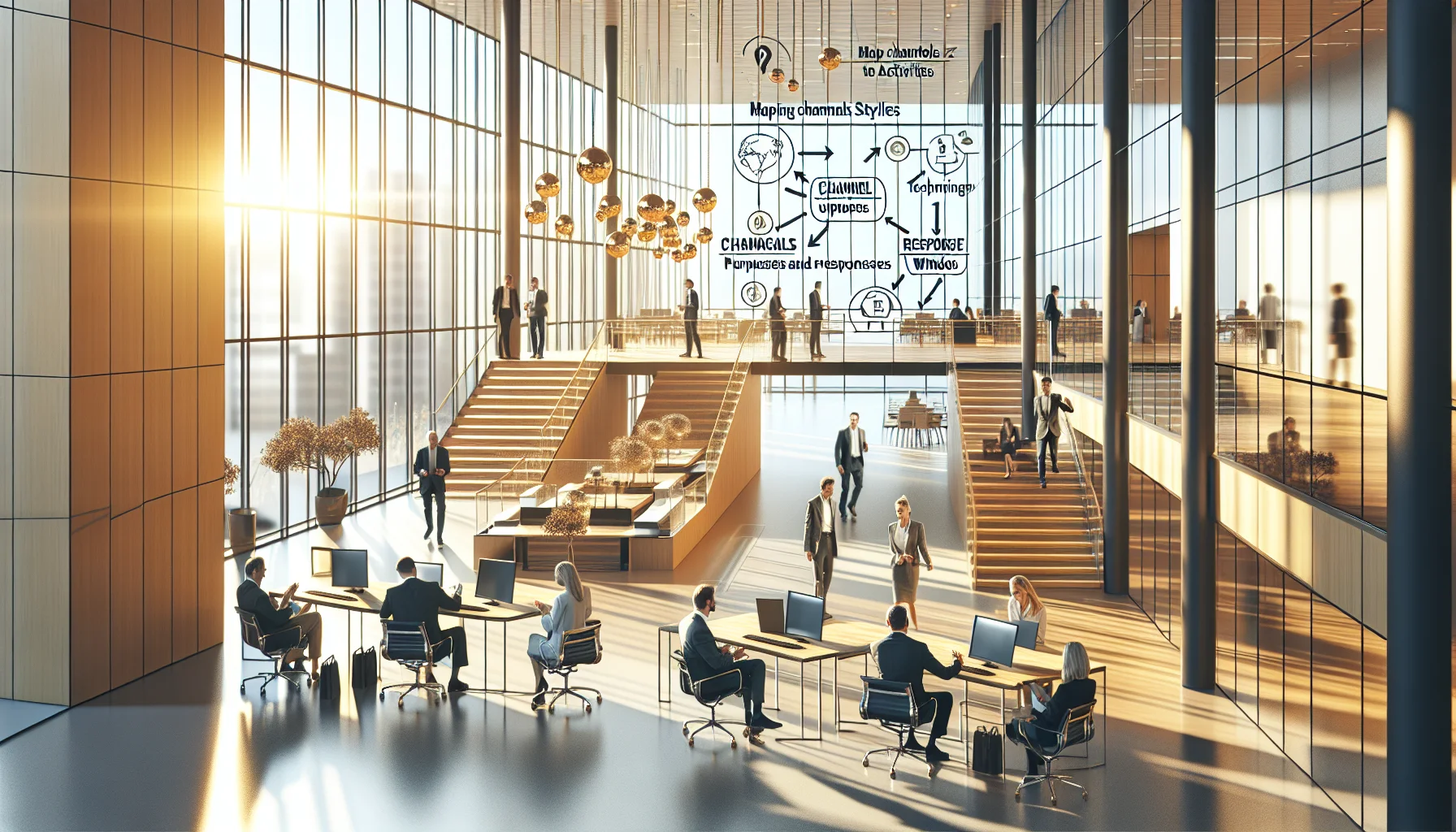
Mapping channels to activities, defining channel purposes and response windows, and using paired formats (video + chat) increases engagement and retention for Gen Z and Boomers. Use short pilots, facilitator scripts and measurable metrics to reduce meeting fatigue and raise completion; iterate quickly based on engagement data.
Introduction: In our experience, successful learning programs hinge on clear alignment between teaching format and participant preferences. Early on, teams must account for how communication styles learning differs by age cohort. This article explains how preferred channels shape engagement, retention, and application for Gen Z and Boomers and gives practical, implementable guidance.
We’ll map channels to activities, recommend protocols for cohorts, and provide scripts and templates facilitators can use immediately. Expect industry examples, short checklists, and conflict-handling language you can copy into session guides.
Mapping channels to learning activities clarifies expectations and reduces friction. Use the phrase communication styles learning to frame decisions when designing modules: which channels support transfer of skill, which support reflection, and which support community.
Below is a concise mapping that we've found effective in blended programs. Each mapping includes the learning objective, the preferred channel by cohort, and facilitation tip.
For designers concerned about how to balance asynchronous vs synchronous, remember that mixing channels increases accessibility and reduces pressure on a single format. Reinforce each learning objective across at least two channels to increase retention and accommodate preferred communication styles learning.
Practice-focused activities (role-plays, simulations) benefit from live or recorded video with peer feedback. Theory and conceptual content can be delivered by email or short courses. When you pair channels—e.g., video demo + chat reflection—you accommodate different learning rhythms and honor varied communication styles learning.
Understanding tendencies reduces stereotypes and improves design. Gen Z tends to prefer rapid, visual, and interactive formats; Boomers often value structure, context, and live interaction. We refer to this pattern repeatedly when aligning channel choice and evaluation metrics for communication styles learning.
Key differentiators we've observed:
When learning design ignores preferences, participation and knowledge transfer suffer. For example, we ran a cohort where materials were distributed exclusively by chat: completion rates fell among Boomers by 27%. After adding email summaries and optional live Q&A, completion and application improved across groups. This underscores that acknowledging communication styles learning improves both engagement and application.
Establishing explicit protocols eliminates ambiguity and reduces miscommunication. Create simple cohort rules that cover channel purpose, expected response times, meeting norms, and feedback cadence. Use these rules to normalize cross-generational behaviors and reduce friction during training.
Recommended protocol elements (use as a template):
Below are short facilitator scripts and an example template you can paste into a session brief.
Practical platforms that support these protocols often provide built-in analytics for engagement (available in tools like Upscend). Using such analytics helps identify dropout points and tailor follow-ups without relying on anecdote alone.
Miscommunication and meeting fatigue are common pain points when cohorts mix Gen Z and Boomers. Below are three realistic scenarios with ready-to-use facilitator responses and de-escalation language.
Situation: A Boomer participant calls out the tone of chat-based feedback as too casual.
Facilitator response script:
This response validates the concern, restates channel purpose, and offers an alternative, reducing escalation.
Situation: Gen Z learners report that long live sessions are draining and reduce concentration.
Facilitator response script:
Small structural changes often restore engagement without compromising learning objectives.
Situation: A task stalls because Boomer participants expect a formal emailed brief while Gen Z waits for chat confirmation.
Facilitator response script:
Clear, time-bound commitments reduce friction and clarify accountability across generations.
How you measure engagement determines which communication choices persist. Use a small set of reliable metrics tied to behavior rather than opinion: completion rates, task submission times, and practice attempts per channel.
Implement a rapid learning loop:
Best practices to reduce meeting fatigue:
We’ve found that rotating the dominant channel every session prevents dominance effects and keeps the learning environment inclusive. Use A/B comparisons and short pulse surveys to see which mix reduces fatigue while preserving outcomes. Again, analytics available in certain learning platforms (available in tools like Upscend) make these comparisons actionable and fast.
Communication preferences materially affect how Gen Z and Boomers learn. Designing for communication styles learning means mapping channels to activities, setting clear protocols, and equipping facilitators with scripts for conflict resolution. In our experience, programs that deliberately layer channels—short videos, structured chat, formal email summaries, and targeted live sessions—achieve higher completion and better skill transfer.
Quick checklist to implement this week:
Final thought: Start small, measure quickly, and iterate. Adopting explicit communication protocols reduces miscommunication, improves digital etiquette, and combats meeting fatigue while honoring the varied communication styles learning needs of Gen Z and Boomers. If you want a practical template bundle and facilitator scripts, adapt the examples above and test them in your next cohort.
Call to action: Implement one protocol from the checklist in your next session and measure the impact on participation and task completion; use the scripts above to standardize responses when conflicts arise.
The Upscend Team provides actionable insights on technology and business strategy.
Book a walkthrough and we'll show you how it applies to your own content.
 L&D
L&DDecember 21, 2025
This article explains why gamification in LMS raises engagement, completion, and retention when aligned with instructional design. It outlines effective game mechanics — badges and leaderboards, progress bars, timed challenges — and provides a 6-8 week pilot checklist, measurement tactics, and common pitfalls to avoid. Use metrics to verify learning transfer.
 General
December 22, 2025
This article explains how LMS gamification and gamified learning transform courses into practice-focused experiences. It outlines core game mechanics (points, badges, leaderboards), design patterns, a phased rollout checklist, measurement tiers, and real corporate examples showing measurable gains such as faster ramp times and improved recall. It recommends piloting with clear success metrics.
 Lms
LmsDecember 23, 2025
Mobile learning LMS is essential for modern deployments, improving engagement, time-to-competency, and retention. Design mobile-friendly courses with micromodules, responsive layouts, and touch-optimized interactions; prioritize offline sync and mobile analytics. Pilot with core personas, measure completion and resume rates, then iterate UX and content before scaling.
 Workplace Culture&Soft Skills
January 4, 2026
This article recommends prioritizing a few WCAG-aligned changes—text scaling, contrast, and keyboard navigation—plus inclusive learning design to make accessible training Boomers effective without alienating Gen Z. It outlines features, design patterns, testing protocols, and estimated costs/timelines for a phased 10-module rollout with measurable KPIs.