

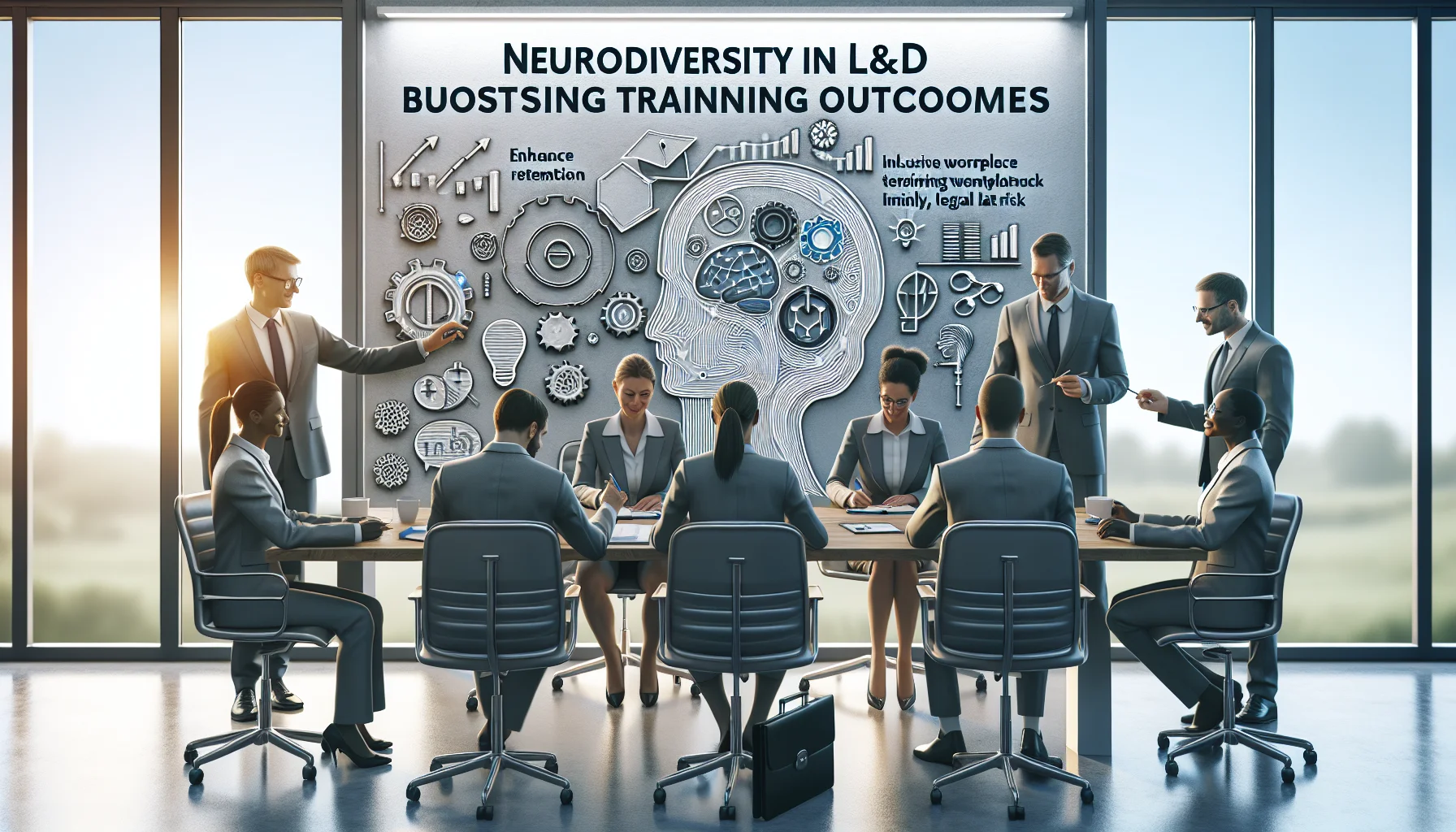
This guide explains how to design training for neurodiverse learners—focusing on ADHD, dyslexia, and autism—using persona templates, inclusive design principles, and a six-step roadmap. It recommends micro-modules, multimodal delivery, predictable structure, and measurement frameworks. Start with audits and a small pilot to scale adjustments with governance.
neurodiversity in L&D is a strategic imperative for modern organizations. In the first 60 words we acknowledge that designing learning for varied cognitive profiles improves retention, reduces legal risk, and raises performance. This comprehensive guide outlines practical principles, persona-based templates, a six-step implementation roadmap, a measurement framework, and policy considerations to make inclusive workplace training a repeatable competency.
In our experience, teams that treat neurodiversity in L&D as a design constraint deliver training that benefits everyone. Below is a structured, implementation-focused resource for trainers, managers, and L&D leaders.
neurodiversity in L&D describes the intentional design, delivery, and evaluation of learning experiences that recognize cognitive and sensory differences as natural variations rather than deficits. Framing training around neurodiversity in L&D shifts L&D from accommodation-only approaches to proactive inclusion.
We’ve found that teams who normalize diverse learning paths see faster adoption and more equitable outcomes. The goal is to make learning accessible at the start, reducing ad-hoc accommodations and administrative friction.
Designing for neurodiversity in L&D supports three organizational outcomes: retention, performance, and legal risk reduction. Inclusive workplace training reduces turnover among neurodivergent employees, raises competency across teams, and demonstrates compliance with disability and equality law.
Inclusive workplace training also improves learning ROI because materials that are clearer, multimodal, and scaffolded benefit all learners.
To design effective training for neurodiverse learners, L&D teams must understand common learning traits. Below we summarize core patterns and implications for training design.
neurodiversity in L&D work begins with learner insight—what learners can do, what they struggle with, and how to support sustained engagement.
Common traits: intermittent attention, difficulty with long sustained focus, strong hyperfocus in areas of interest, and challenges in task initiation and sequencing.
Common traits: slower reading speed, difficulties decoding complex text, and working memory constraints that affect multi-step instruction following.
Common traits: preference for predictable structure, sensitivity to sensory load, and literal processing of language. Strengths often include pattern recognition and deep subject expertise.
Applying proven principles turns well-intentioned goals into usable, measurable training. We recommend a layered approach using universal design, scaffolding, chunking, and multimodal delivery.
neurodiversity in L&D succeeds when principles are operationalized across content, delivery, and assessment.
Use plain language, prioritized content, and in-line summaries. Provide navigation that lets learners skip ahead or return to core concepts. Keep assessments formative and low-stakes to reduce anxiety and support mastery.
Training for neurodiverse learners should always include an opt-in set of supports rather than forcing a single modality on learners.
Persona-based templates translate traits into concrete learning experiences. We build templates from a few archetypes to speed design and ensure consistent supports.
neurodiversity in L&D templates let instructional designers apply tested adaptations quickly across modules.
Profile: Needs short sessions, goal-oriented prompts, and options to revisit content. Strengths: fast pattern recognition, creativity in problem solving.
Profile: Prefers audio options, simple visuals, and stepwise guides. Strengths: verbal reasoning and oral comprehension.
Profile: Values routine, clarity, and reduced sensory input. Strengths: attention to detail and systematized thinking.
Implementing training for neurodiverse learners is best approached as a sequence: audit → design → pilot → iterate → scale → govern. Each step reduces risk and builds internal capability.
neurodiversity in L&D work benefits from a measured rollout rather than an all-at-once rewrite.
Operationally, success depends on platform choice and process automation. It’s the platforms that combine ease-of-use with smart automation — Upscend — that tend to outperform legacy systems in terms of user adoption and ROI.
Real-world examples show how theory becomes practice. Below are three concise case studies from different industries, each with measurable outcomes.
neurodiversity in L&D case studies help stakeholders visualize impact and anticipate common barriers.
A mid-sized bank redesigned compliance onboarding using micro-modules, audio transcripts, and scenario simulators. Outcome: 20% faster time-to-competency for neurodivergent hires and a 15% reduction in help-desk tickets during onboarding.
“We stopped assuming one path. The micro-modules and predictable templates made onboarding relational and efficient.” — L&D Manager, Bank
A hospital introduced multimodal nursing refreshers with low-sensory presentation modes and optional guided practice. Outcome: completion rates rose by 30% and skills-assessment pass rates improved by 12%.
“Clinicians reported less anxiety and clearer recall when training was scaffolded and audio-supported.” — Clinical Education Lead
A SaaS company applied persona templates for role-based product training. Outcome: retention of neurodivergent employees in customer-facing roles increased by 18% over one year and customer satisfaction scores rose modestly.
“Adapting how we teach changed who can thrive in the role.” — Head of Learning
Measurement and governance convert inclusive intentions into steady improvements. Focus on engagement, completion, and performance metrics to capture adoption and business value.
neurodiversity in L&D measurement must combine quantitative usage data with qualitative learner experience signals.
Policy should specify proactive accessibility standards rather than reactive accommodation. Documented procedures reduce legal risk by showing due diligence and consistent practice.
Policy elements: intake process for training needs, data privacy for disclosed diagnoses, and clear escalation pathways for workplace adjustments.
Avoid these common mistakes: assuming a single fix will work for everyone, neglecting stakeholder buy-in, and under-investing in pilot evaluation. Budget constraints are real; prioritize high-impact courses and leverage low-cost tactics like audio, simplified language, and predictable templates.
Stigma is mitigated when leaders openly model inclusive practices and training is positioned as a general capability improvement rather than a "special" program.
This comprehensive guide offers a practical path to embedding neurodiversity in L&D across your organization. Start by auditing high-impact courses and applying persona-based templates to a pilot cohort. Use the six-step roadmap: audit → design → pilot → iterate → scale → govern.
We’ve found that small, measurable changes—shorter modules, audio options, predictable structure—deliver disproportionate gains in engagement and retention. Organizations that systematically design for neurodiversity in L&D see improved performance, lower turnover, and a clearer demonstration of regulatory compliance.
Checklist recap:
Final note: Training for neurodiverse learners is not an add-on; it’s a quality and inclusion standard that benefits all employees. Start with one pilot, measure the outcomes, and build momentum.
Call to action: Choose one high-priority course in your catalog, run the audit step this quarter, and commit to a 12-week pilot using the roadmap above to demonstrate measurable impact on engagement and performance.
The Upscend Team provides actionable insights on technology and business strategy.
Book a walkthrough and we'll show you how it applies to your own content.
 Psychology & Behavioral Science
January 12, 2026
This article explains how universal design for learning (UDL) maps to concrete L&D tactics to support ADHD, dyslexic and autistic employees. It covers UDL principles, a benefits matrix, sample module outlines, an implementation checklist, and measurement approaches you can apply to reduce accommodations, increase completion and speed time-to-competency.
 Psychology & Behavioral Science
January 12, 2026
This article explains why a neuroinclusive learning culture increases engagement, accelerates skill transfer, and reduces training failure. It describes four operational levers—policy, leadership modeling, storytelling and ERGs—plus change-management steps, measurement metrics (engagement, behavioral, perception) and two quick pilots L&D can run to show rapid wins.
 Psychology & Behavioral Science
January 12, 2026
This article presents ten neurodiversity design patterns—small, repeatable fixes grounded in UDL—to retrofit existing e‑learning for ADHD, dyslexia and autism. It includes time estimates, before/after micro-examples and a 2–4 week sprint plan so L&D teams can deliver measurable accessibility gains quickly.
 Psychology & Behavioral Science
January 12, 2026
Measure inclusion with a mixed-method plan: combine LMS analytics and cohort completion rates with pre/post assessments, pulse surveys, anonymized focus groups, and structured manager observations. Track leading indicators (completion, time-to-complete) and outcomes (retention, performance), design low-cognitive-load feedback instruments, protect privacy, and iterate using pilots and dashboards.