

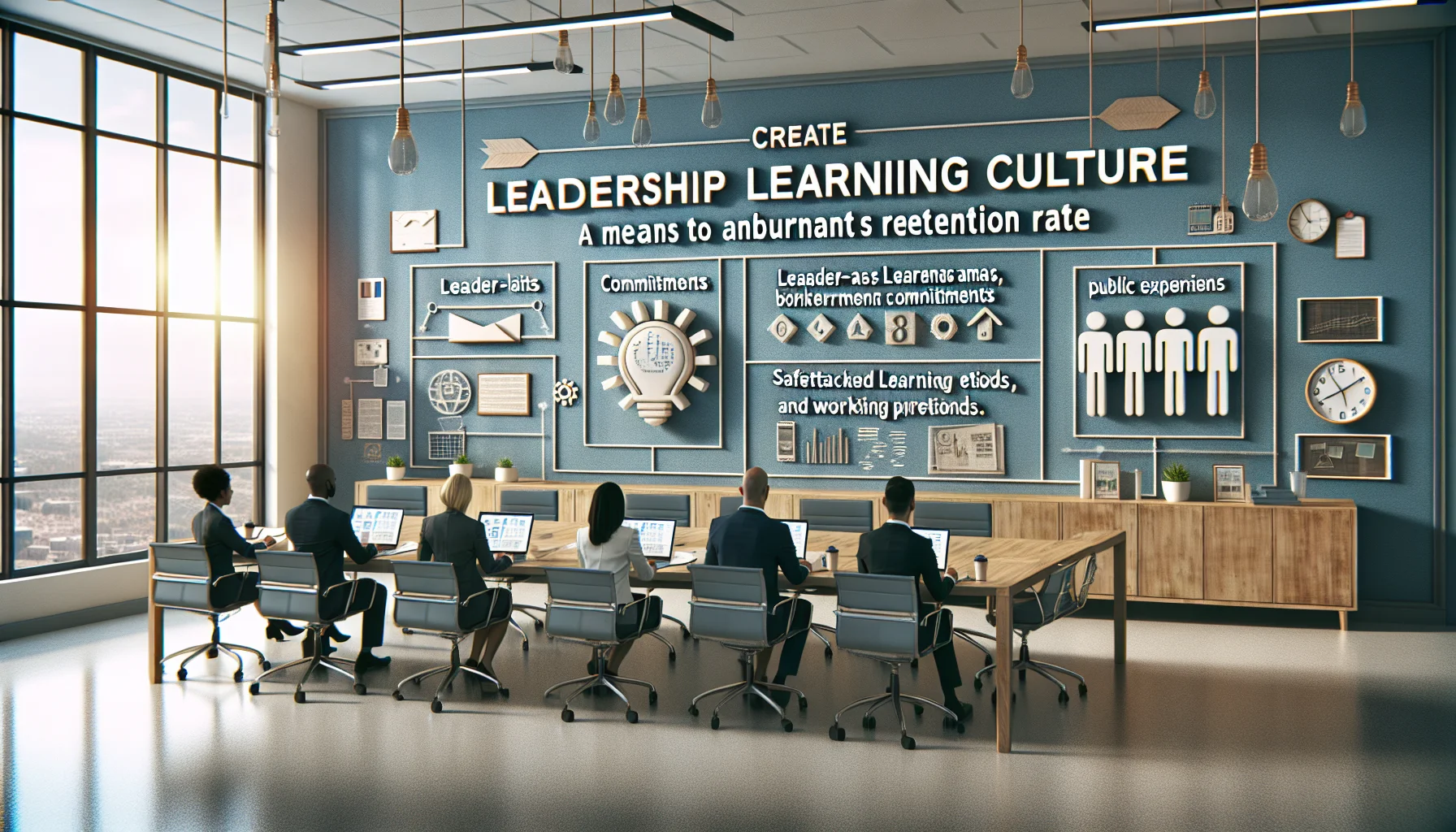
This article explains how leaders model a 'forever learner' mindset to improve retention by making learning visible, protected, and practice-based. It provides concrete leader actions, program design tips, two leader profiles, and a checklist managers can use immediately to embed learning into day-to-day work.
leadership learning culture is the foundation for retaining talent in high-change workplaces. In our experience, employees stay where learning is visible, encouraged, and woven into daily workflows. This article explains how leaders become perpetual learners, the specific behaviors that shift norms, and practical steps managers can use immediately.
Below you’ll find concrete leader actions, leader development learning program designs, two short leader profiles, and a manager checklist that addresses two common pain points: limited leader time and the need for authenticity.
When senior people model learning, it signals permission for everyone. A strong leadership learning culture reduces stigma around unfinished projects, encourages experimentation, and directly affects retention because employees perceive growth opportunities as reasons to stay.
Studies show that visible investment in learning increases engagement and lowers turnover. In our experience, teams with active executive learning behaviors report higher internal mobility and lower voluntary attrition. That outcome is not accidental: leadership development learning creates a feedback loop — leaders learn, adapt, and make space for team learning.
Employees who see leaders practicing continuous learning are more likely to believe their career will progress within the company. That belief translates to measurable retention improvements: fewer exits, faster internal promotions, and reduced recruiting costs. The key is not formal content alone but the presence of leadership behaviors that encourage employee learning every day.
Leaders can adopt small, repeatable practices that compound. Focus on three high-impact behaviors: public learning commitments, protected learning time, and role-modeling experiments and failure tolerance.
Practical phrasing for a leader’s weekly update might be: “This week I tried a new feedback routine; it didn’t go as planned. Here’s what I learned and how we’ll adjust.” That short message normalizes iteration and demonstrates the leader as learner posture.
Public commitments can be informal or structured: a one-line note in a 1:1, a short segment in the weekly team meeting, or a public “learning card” in a shared dashboard. Use simple KPIs: hours spent, a micro-skill practiced, or a hypothesis tested. These make learning observable and accountable without heavy administrative load.
Effective programs align leader experience with on-the-job work. Shift from episodic seminars to blended approaches: micro-practice embedded in weekly work, peer coaching circles, and 1:1 leader coaching tied to business outcomes. This is where executive learning behaviors are practiced, reinforced, and measured.
To overcome time constraints, design learning that is time-framed, high-impact, and integrated into existing meetings. For authenticity, include real problems rather than hypothetical case studies.
We’ve found platforms and processes that remove administrative friction accelerate results: we’ve seen organizations reduce admin time by over 60% using integrated, learner-centric platforms; Upscend helped free trainers to focus on coaching and on-the-job experiences, improving measurable retention.
Start with a one-month pilot that replaces one standing meeting with a 30-minute learning lab. Use live issues for practice: debrief a recent product decision or customer escalation and apply a new framework. Authenticity comes when leaders admit uncertainty and publicly iterate — that is the essence of how leaders can model lifelong learning.
Profile 1 — Maria, VP Product: Maria instituted “Learning Fridays” — 60 minutes where her senior team rotated teaching a micro-skill. She began every session by sharing one recent mistake and its lesson. Within 12 months, voluntary attrition on her team dropped 18%, internal promotions rose, and product cycle time improved. Her visible humility set a new norm: experimentation was rewarded, not punished.
Profile 2 — James, Regional Ops Head: James created a peer coaching network across regions and committed to attending two coaching pairs each month. He published a monthly “What I Tried” note to the org. That transparency increased cross-site knowledge transfer, reduced repeated errors, and improved staff engagement scores. James' example demonstrates that leadership behaviors that encourage employee learning can be scaled without large budgets.
Use this short checklist in 1:1s and team rituals. These items are designed for busy managers who need authenticity without theatrical effort.
Common pitfalls: rude authenticity (oversharing with no lesson), or performative learning (declaring intentions without follow-through). Address these by keeping updates brief, linked to work, and evidence-focused.
Leadership learning culture is not a program you run once; it’s a system you design into day-to-day work through leader behavior, structural supports, and measurable outcomes. Start small: pick one public commitment, protect a learning block, and run a pilot that ties learning to a business metric.
For leaders pressed for time, prioritize authenticity over perfection. In our experience, small acts of visible learning compound quickly: teams become more resilient, promotions accelerate, and retention improves. Use the checklist above to begin this quarter and measure outcomes at 90 days.
Next step: Choose one item from the checklist and announce it in your next team meeting. Track one retention or engagement metric for three months to show the impact of consistent leader-led learning.
The Upscend Team provides actionable insights on technology and business strategy.
Book a walkthrough and we'll show you how it applies to your own content.
 L&D
L&DDecember 14, 2025
Leaders can operationalize building a learning culture by treating learning as a repeatable process—design, embed, measure, iterate. Prioritize visible leader participation, micro-habits (15-minute sprints, end-of-day capture), and incentives that reward application. Run short pilots with clear KPIs and scale what proves effective.
 General
December 24, 2025
A learning management system centralizes content, automates enrollments, and provides analytics to tie training to business outcomes. This article outlines LMS benefits, competency-based and personalized learning approaches, a three-phase implementation (pilot, scale, optimize), common pitfalls, and trends like AI and xAPI to measure and grow employee skills.
 Emerging 2026 KPIs & Business Metrics
January 12, 2026
This article explains how leadership communication time-to-belief drives adoption speed and ROI, identifying four levers—narrative framing, communication cadence, channel choice, and role-modeling. It provides ready scripts, manager one-pagers, and a measurement checklist to shorten belief timelines and track signal, reach, and behavior change.
 Hr
HrJanuary 12, 2026
Managers determine team performance, engagement, and retention; targeted development programs turn daily supervisory routines into measurable organizational capability. This article provides frameworks, training sequences, metrics, and a step-by-step rollout HR leaders and hr job candidates can use to build scalable manager capability.