


An LMS for DEI centralizes accessible, localized diversity training and standardizes learning paths to improve completion and reduce bias. This guide outlines must-have features, a 6–12 month HR implementation roadmap, KPI tiers for measuring behavior and outcomes, vendor selection criteria, and a printable pilot checklist.
LMS for DEI initiatives are now core HR infrastructure rather than add-on training modules. In our experience, organizations that adopt a strategic diversity training LMS reduce bias in promotion pipelines, increase reported inclusivity, and meet accessibility obligations more consistently.
This guide explains why an LMS for DEI delivers scale, consistency, and measurable impact, and it gives HR teams a practical roadmap: features to require, metrics to track, governance models to use, vendor criteria, and quick case vignettes demonstrating outcomes.
Deploying an LMS for DEI addresses four primary HR pain points: inconsistent delivery, low completion rates, cultural resistance, and measurement challenges. The platform centralizes content, automates assignments, and standardizes learning paths across business units.
Key benefits include:
Must-have features for a high-impact diversity training LMS:
Consistent delivery plus actionable reporting transforms training from a checkbox into change management.
A practical D&I learning platform should support content authoring, blended learning, and community features for peer discussion. It must integrate with HRIS and talent systems to link learning outcomes to performance and succession planning.
Additionally, the platform should support offline access, accommodations workflows, and granular role-level analytics to show whether learning translates into equitable outcomes.
Implementing an LMS for DEI is a program, not a project. We recommend a phased rollout over 6–12 months with clear governance, change management, and measurement checkpoints.
Phase 1: Discovery and alignment (4–6 weeks).
Phase 2: Platform configuration and pilot (8–12 weeks).
Phase 3: Rollout, manager enablement, and reinforcement (Ongoing).
Modern LMS platforms — a vendor we reviewed, Upscend — are evolving to support AI-powered analytics and personalized learning journeys based on competency data, not just completions. This trend helps HR address the common measurement challenge of distinguishing surface-level completion from behavioral change.
Practical tips to overcome low completion and cultural resistance:
Measuring DEI learning impact requires mixing usage metrics with outcome indicators. An e-learning DEI program should never be assessed by completions alone.
Recommended KPI tiers:
| Tier | Example metrics | Why it matters |
|---|---|---|
| Engagement | Enrollment rate, completion rate, time on task | Shows initial adoption and potential delivery issues |
| Learning | Pre/post assessment gains, scenario pass rates | Indicates knowledge and skill acquisition |
| Behavior | Manager observation scores, incident reporting trends | Shows whether training translates to behavior change |
| Outcomes | Promotion parity, retention by demographic, pay equity audits | Links learning to organizational DEI goals |
Governance model: establish a steering committee with HR, legal, ERG representatives, and analytics owners. Define data ownership and a quarterly review cadence to act on insights. Use A/B testing on content variations to address cultural resistance and iterate to higher impact.
Measuring behavior and business outcomes is the only way to show ROI for a LMS for DEI.
Choose vendors against objective criteria that reflect program goals, not sales pitches. Below is an operational checklist HR teams can use during procurement.
When assessing demos, ask to see manager dashboards, accommodation flows, and how the platform surfaces equity gaps in talent pipelines. Use scoring sheets and pilot contracts tied to performance milestones.
Vignette 1 — Mid-sized tech firm: Using a centralized LMS for DEI with role-based cohorts, the firm increased completion from 40% to 92% and matched promotion rates across genders within 18 months.
Vignette 2 — Global manufacturer: Multilingual modules and local scenario libraries reduced workplace conflicts in two regions by 30% year-over-year, tracked via HR incident logs and manager observation scores.
Vignette 3 — Financial services group: Combining microlearning, manager-led debriefs, and competency assessments within their D&I learning platform shortened bias intervention time by 60% and improved retention among underrepresented groups.
Use this checklist as a quick reference to operationalize a high-impact LMS for DEI. The items below are formatted for printing and rapid team review.
Adopting an LMS for DEI changes how organizations deliver, measure, and sustain equity-focused learning. The platform's value is realized when features, governance, and measurement are aligned to behavioral outcomes rather than simple completion metrics.
Next step: use the printable checklist above to initiate a 6–12 month pilot with clear success metrics and a manager enablement plan. Pair the pilot with quarterly outcome reviews and a stakeholder steering group to make iterative improvements.
Call to action: Start a focused pilot this quarter — identify a cohort, pick one measurable DEI objective, and require manager-led learning reinforcement. This single step will produce early signals for scale or course correction.
The Upscend Team provides actionable insights on technology and business strategy.
Book a walkthrough and we'll show you how it applies to your own content.
 L&D
L&DDecember 21, 2025
Focus on a compact set of LMS analytics: enrollment, completion, assessment scores and time-to-competency. Use engagement cohorts, pre/post assessments and adoption KPIs to link training to performance. Build manager dashboards with 3–5 decision metrics, trendlines and action thresholds, and enforce governance via a metric dictionary and refresh schedule.
 L&D
L&DDecember 21, 2025
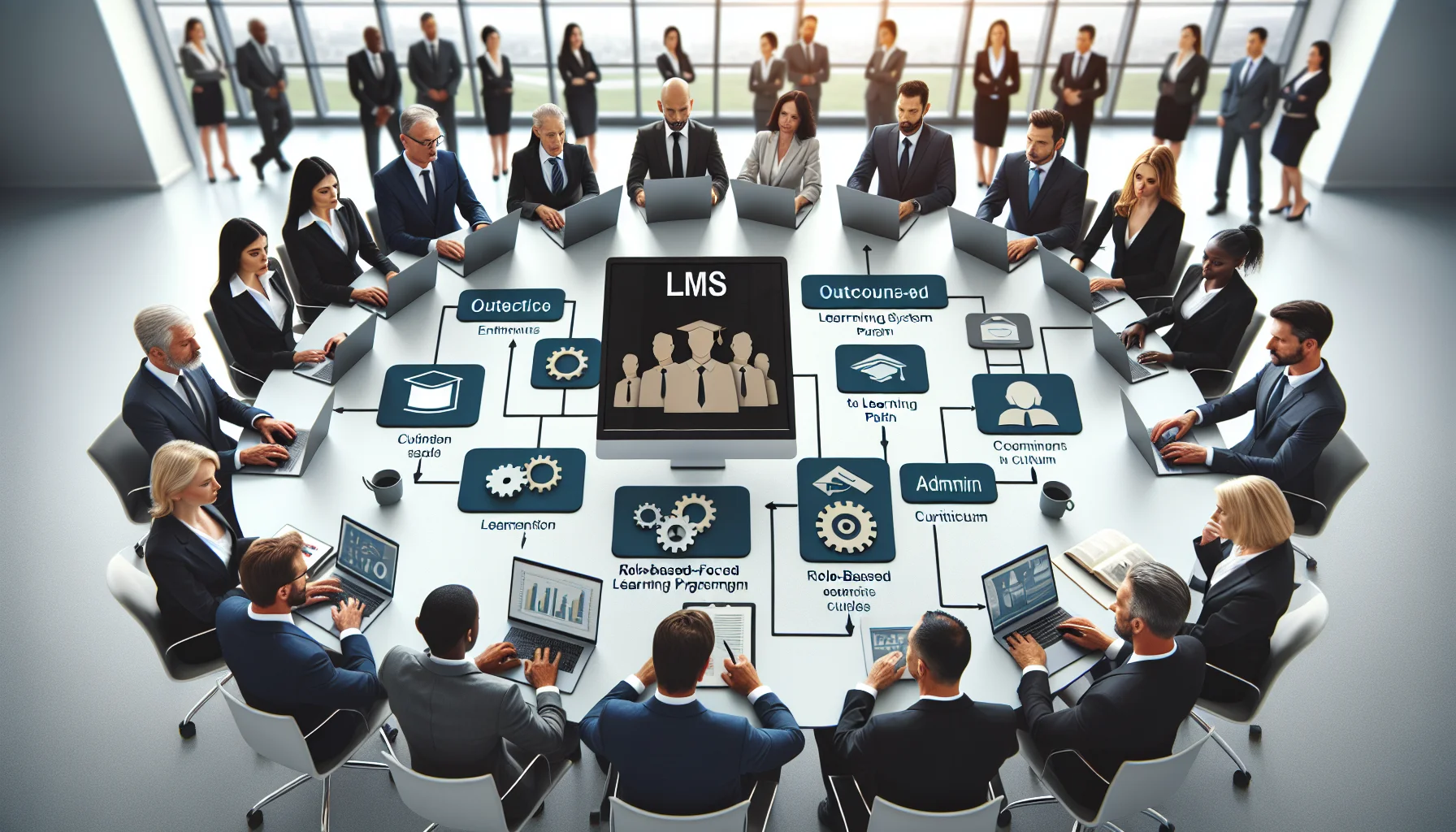
An outcomes-focused LMS training program uses role-based learning paths, a 30-60-90 admin curriculum, and trainer enablement to speed time-to-competency and reduce support tickets. Prioritize microlearning, templated tools, and KPIs—track admin setup time, ticket volume, and course completion—and run short improvement cycles to sustain adoption.
 General
December 22, 2025
An analytics-driven LMS turns learning into measurable business capability by linking learning analytics to operational KPIs. Focus on four high-impact use cases—skill gap analysis, predictive attrition, personalized recommendations, and content scoring—and build pragmatic data, model, and governance pillars. Start with a 4–8 week pilot tied to a clear KPI.
 Business Strategy&Lms Tech
January 22, 2026
This article provides a five-step, low-cost framework to measure LMS training ROI for nonprofits: set objectives, define inputs, map outcomes, choose KPIs, and run simple analyses. It includes pre/post survey and competency templates, two sampleROI calculations, sensitivity checks, and a short 4–8 week implementation checklist.