


Gamification increases short-term engagement and completion—often improving completion rates by 10–30%—but sustained retention and transfer depend on assessment design, spaced practice, and coaching. Use five KPIs (engagement, retention, transfer, cost, scalability), run a 90‑day controlled pilot, and apply the vendor checklist before scaling.
Gamification learning outcomes are the focal metric for many L&D leaders evaluating whether to invest in game design, badges, leaderboards, or stick with instructor-led modules. In this article we compare gamification learning outcomes to traditional instruction across measurable criteria so you can decide which approach improves completion and retention metrics for your programs.
For clarity, gamification learning outcomes refers to measurable learner performance changes tied to game mechanics layered onto content rather than fully game-based learning experiences. Game-based learning often uses simulations or games as the primary delivery; gamification uses points, progress bars, badges, or narratives to shape behavior.
Traditional instruction encompasses synchronous instructor-led training, slide-driven e-learning, and linear remediation workflows. We focus on workplace learning and online courses where longitudinal metrics—completion, retention, transfer to job performance—matter.
Mislabeling a course as "gamified" is common. A progress bar alone rarely yields sustained gains. In our experience, the strongest improvements in gamification learning outcomes appear when mechanics align with clear learning objectives and assessment design.
Choose evaluation criteria before design. We recommend five primary dimensions: engagement, retention, transfer, cost, and scalability. Each maps to different business questions and KPIs.
Define a baseline for traditional programs, then compare delta changes. Use control groups when possible and register metrics like completion rate, pass rate, and follow-up performance. We’ve found that small-sample A/B tests often overstate effects; scale matters for reliable measures of gamification learning outcomes.
Below is a concise comparison of key performance indicators. Visualize these as split-screen KPI tables and simple radar charts to reflect feature fit and impact.
| Criterion | Gamification (layered) | Traditional Instruction |
|---|---|---|
| Completion rate | Often +10–30% when paired with rewards | Baseline; variable by instructor quality |
| Retention (90 days) | Moderate improvement with spaced challenges | Declines faster without follow-up |
| Transfer to job | High when simulations used; modest with badges | High for hands-on, coached scenarios |
| Cost (TCO) | Higher initial cost; lower marginal cost | Lower initial; higher per-session facilitation cost |
| Scalability | Very scalable via LMS integrations | Limited by instructor availability |
Key insight: gamification learning outcomes improve short-term completion and engagement, but sustained retention and transfer depend on instructional design and reinforcement schedules.
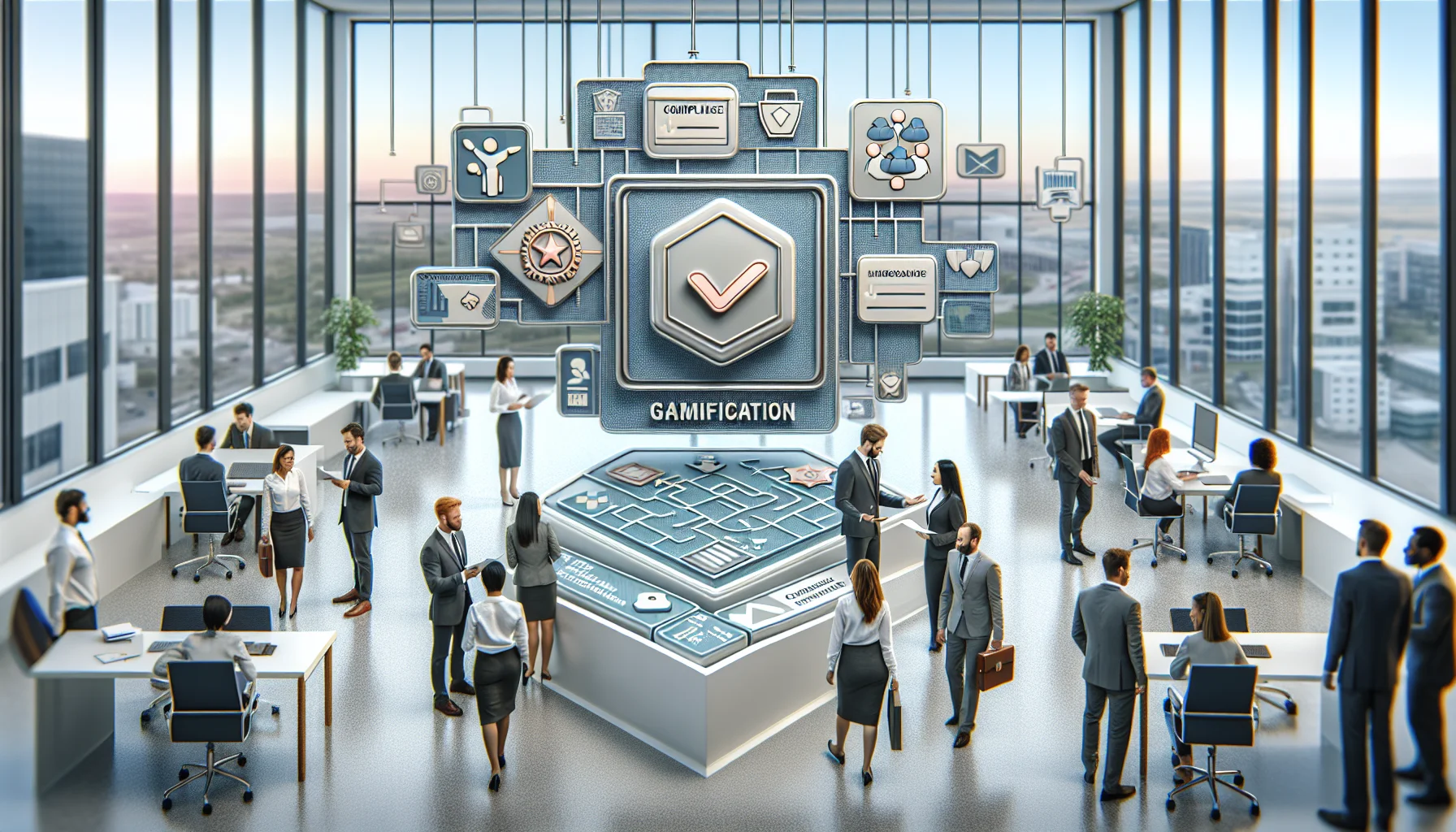
Use split-screen annotations: left pane shows a gamified dashboard with leaderboards and micro-challenges; right pane shows a standard module UI with linear progress. Annotate expected KPI lift and where effort should focus (assessment fidelity, feedback loops).
Studies and vendor benchmarks report consistent increases in completion and engagement when gamification is implemented well. However, improvements in long-term retention and transfer require strong assessment design and reinforcement—game mechanics alone are insufficient to guarantee learning transfer.
Use this abbreviated decision tree to choose an approach:
Vendor/feature checklist (use before procurement):
Practical note: platforms now expose real-time signals (progress, drop-off, retry rates) that let designers iterate quickly. This process requires real-time feedback (available in platforms like Upscend) to help identify disengagement early and tune reward systems for learners.
Case A — Gamified onboarding (software sales team):
Case B — Traditional instructor-led remediation (manufacturing compliance):
Pitfall: high implementation cost with weak design. Fix: prototype a minimal viable gamified flow and measure small cohorts before enterprise rollout.
Pitfall: measuring engagement but not transfer. Fix: tie game tasks to validated assessments and job metrics.
Pitfall: learner fatigue and superficial play. Fix: rotate challenges, reduce reward frequency over time, and focus rewards on mastery, not just activity.
In our experience, gamification learning outcomes reliably boost short-term engagement and completion rates when mechanics are well-aligned to learning goals. However, long-term retention and real-world transfer are achieved through blended strategies that combine interactive gamified elements with instructor coaching, spaced practice, and robust assessment design.
When selecting an approach, follow this rule of thumb: use gamification to scale engagement and reduce marginal costs for distributed populations; use traditional instruction where hands-on coaching, safety, or complex human feedback are required. For most enterprise learning portfolios, a hybrid model yields the best ROI.
Next steps checklist:
Key takeaway: There’s no one-size-fits-all. Evaluate goals, constraints, and the specific gamification learning outcomes you need—completion, retention, or transfer—and design the approach accordingly.
Call to action: Start a 90-day controlled pilot that measures completion, 90-day retention, and job transfer; use the decision tree and checklist here to scope the experiment and calculate projected ROI.
The Upscend Team provides actionable insights on technology and business strategy.
Book a walkthrough and we'll show you how it applies to your own content.
Institutional LearningOctober 21, 2025
This article outlines research-backed gamification techniques for institutional learning, focusing on competency alignment, design frameworks, and measurement. It presents a three-layer model (micro/macro/meta), a 12-week pilot roadmap, key metrics (activation, engagement, mastery), and tech considerations to scale gamified modules while avoiding common pitfalls.
 General
December 28, 2025
This article explains how compliance gamification—badges, leaderboards, micro-credentials—raises mandatory training completion while preserving auditability. It outlines a three-layer program design, six implementation phases with KPIs, anti-cheat controls, and sector examples (finance, healthcare) showing large completion gains. Readers learn steps to pilot and measure impact.
Business Strategy&Lms TechJanuary 25, 2026
This article explains seven gamification mechanics—progress bars, streaks, leaderboards, badges, levels, timed challenges, and social challenges—that raise engagement and course completion. For each it gives psychology, implementation tips, LMS examples, metrics to track, mini cases and common downsides, plus a testing framework for measurement.
 Business Strategy&Lms Tech
January 25, 2026
Gamification in corporate training increases engagement and on-the-job behavior when mechanics map to learning goals and business metrics. Use small extrinsic nudges to start, then emphasize mastery and peer recognition. Measure impact with business KPIs, 90-day cohort analysis, and A/B tests; avoid leaderboards where competition undermines safety or collaboration.